

There’s a common misconception in fashion photography that you need a warehouse full of gear to create a high-end portfolio. This recent studio session was a masterclass in proving that theory wrong. Over the course of a single day, we moved through casual wear, elegant dresses, swimwear, and artistic implied sets—all by manipulating just one or two lights and rotating between three distinct backdrops.
The Toolkit: Lenses & Logic
To capture the range of this session, I relied on my workhorse, the Canon 5D Mark III. Its full-frame sensor delivers a depth and color science that remains a gold standard for skin tones. However, the real variety came from my lens choices:
-
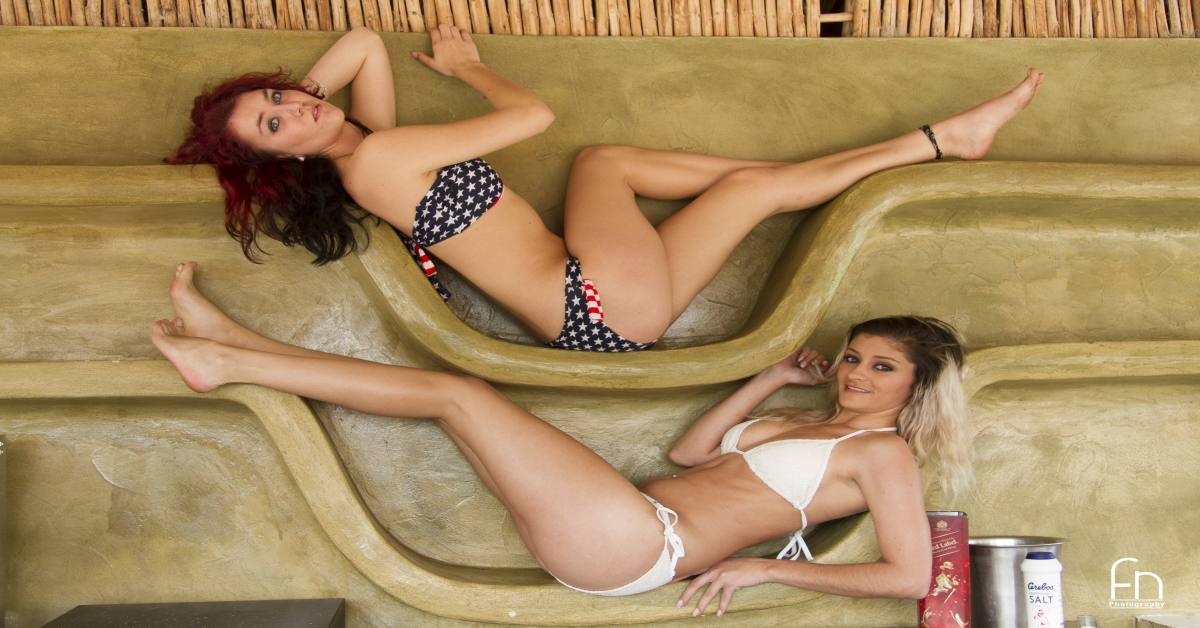
Sigma 35mm f/1.4 Art: My go-to for casual and bikini sets. It allowed me to capture the full environment and the texture of the blue mosaic backdrop, adding energy and movement to the frame.
-
Canon 50mm Standard: The perfect “honest” lens for dresses. It provides a natural perspective that doesn’t distort the clothing, ensuring the fit and flow look exactly as they do in person.
-
Tamron 90mm Macro: My secret weapon for the lingerie and implied sets. While it’s a macro lens, it is an incredible portrait tool. It allowed me to stay back—giving the model personal space—while capturing razor-sharp details of lace and the way light hits the skin.

Shaping the Light: From One Source to Two
The “vibe” of a photo is determined by how you shape the shadows. During this shoot, I alternated between a moody one-light setup and a polished two-light setup using four key modifiers:
-
The Octabox: My primary light for soft, beautiful wrap-around light on the skin.
-
The Large Umbrella: Used on the white backdrop to create a bright, clean, commercial “pop.”
-
The Rectangle Softbox: Perfect for the bikini and lingerie sets to control light spill and highlight body contours.
-
The Small Softbox: My “accent” light used to create a rim of light that separated the model from the dark backgrounds.
One-Light Drama: For the implied and lingerie work on the black backdrop, I stripped everything back. One light (often the feathered Octabox) created a “low-key” look where the shadows told as much of the story as the highlights.
Two-Light Precision: For casual wear and bikinis, I introduced a second light as a fill or rim. This ensured the colors of the clothes were vibrant and the model stood out sharply against the mosaic textures.
The “Human” Element: Why Settings Aren’t Everything
If there is one thing this session reinforced, it’s that photography is not a math equation.
I’ve learned through experience that every model is different. You can never use the exact same settings for every shoot and expect the same results. Every person brings a different skin tone, a unique way of moving, and a different energy.
I spent the first part of every set “playing”—adjusting the light power, moving a softbox an inch, or tweaking my aperture. You have to be willing to experiment in the moment. If you stay stuck on “standard” settings, you miss the unique magic that happens when the light hits that specific person in that specific way.


